

8,221 people: the scale of Russia’s illegal detentions of Ukrainian civilians – monitoring results
Austausch e.V., together with Ukrainian human rights organizations, presents an analytical report on the illegal detention of Ukrainian and foreign civilians by occupying forces of the Russian Federation. The study was prepared as part of the “Systematic Fight Against Impunity” project, in cooperation with Ukrainian civil society organizations – the “Sova” Expert Group, the Center for Civil Liberties, “War Archive” – and independent experts from Norway.
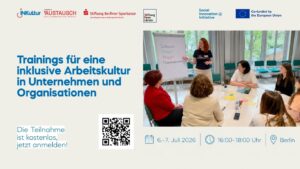
Trainings for an Inclusive Work Culture in Companies and Organizations
Do you represent a company, a civil society organization, an institution or an initiative, and are you open to innovative, inclusive work cultures? Then we invite you to our hands-on trainings.
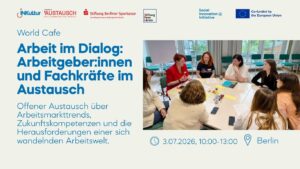
Work in Dialogue: Employers and Professionals Exchange Perspectives
How is the labour market changing in Germany? Which skills are becoming increasingly important, and what expectations do employers and professionals have of each other today? We invite you to an interactive dialogue that brings together Berlin‑based employers, Ukrainian professionals, and everyone interested in the future of work.
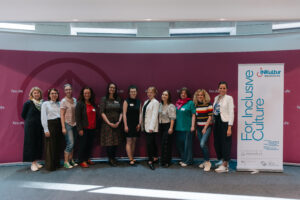
Displacement, Disability and Care: German-Polish Dialogue Calls for Stronger Support for Ukrainian Refugees with Disabilities and Their Caregivers
On 28 and 29 May, the INKuLtur team, together with the Friedrich Ebert Foundation (Warsaw), organized the two-day event “Displacement, Disability and Care: Needs, Challenges and Political Priorities for Germany and Poland” at the Friedrich Ebert Foundation in Berlin. The program combined a public panel discussion with an expert exchange involving stakeholders from Germany and Poland.
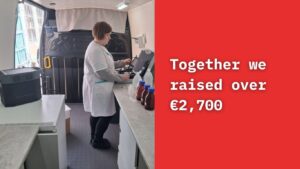
Charging stations for a water-monitoring laboratory during the war in Ukraine: together we raised over €2,700
Last winter we asked our Austausch community to help our friends at the lab. The original goal was a generator to keep the equipment running through the outages. We raised about €2,750 EUR, which wouldn’t cover a generator, so we changed our approach: instead of one large fixed unit, we bought three EcoFlow power stations. Portable, modular, well suited to a team that is no longer in one place. We ordered them ourselves and sent them to Poltava, where they also helped power the evacuation of people and equipment.
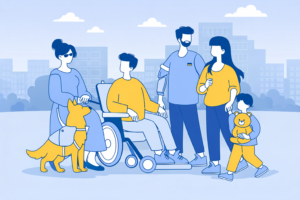
Invisible Care, Unmet Needs: The Situation of Ukrainian Caregivers of Personswith Disabilities in the EU
The first cross-national study of Ukrainian caregivers of persons with disabilities in the EU reveals a group caught between two systems – and falling through the cracks of both.
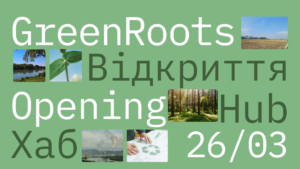
Opening of GreenRoots Hub in Dnipro
On 26 March, the GreenRoots Hub will officially open in Dnipro — a new space dedicated to supporting environmental initiatives and civic activists in Ukraine’s frontline regions.
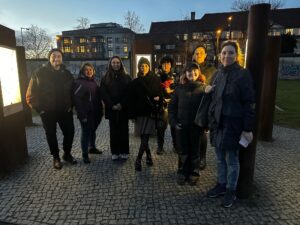
Environment, Recovery and Solidarity: Civil Society Responses in Times of War
When environmental professionals and activists from Ukraine and Germany gathered for the international exchange “Environment, Recovery and Solidarity,” they brought more than expertise – they brought stories of resilience, destruction, and hope from communities facing unprecedented environmental challenges.
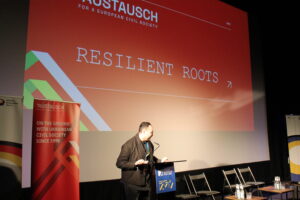
Key Takeaways from the Discussion “Building Climate Resilience in Ukraine” at Café Kyiv 2026
At Café Kyiv 2026, we organised a joint panel with GIZ, the Ukrainian Climate Office, the Frankfurt School of Finance and Management, and the InsuResilience Solutions Fund. Titled “Building Climate Resilience in Ukraine: Cross-Border Environmental Action and Climate Risk-Informed Adaptation,” the discussion brought together policy analysis, climate risk modelling, and practical experience from civil society environmental work.
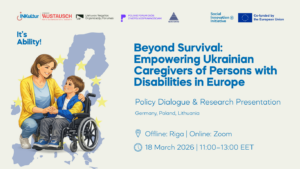
Beyond Survival: Empowering Ukrainian Caregivers of Persons with Disabilities in Europe. Presentation of the research & Policy Dialogue
📍 Riga | Online (Zoom)
🗓 18 March 2026 | 11:00–13:00 EET

