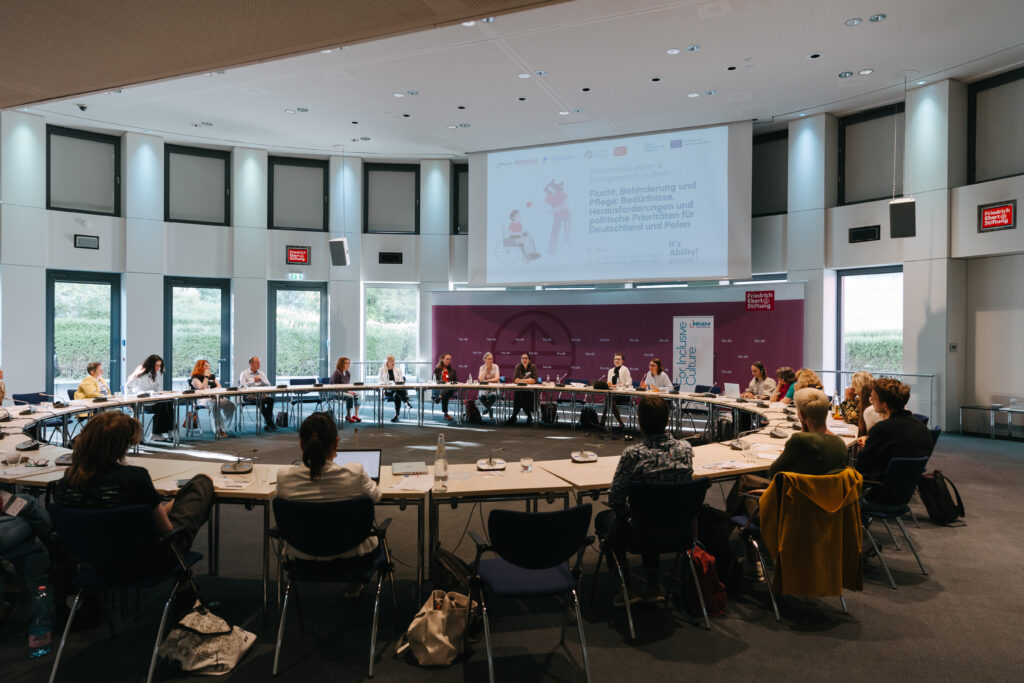
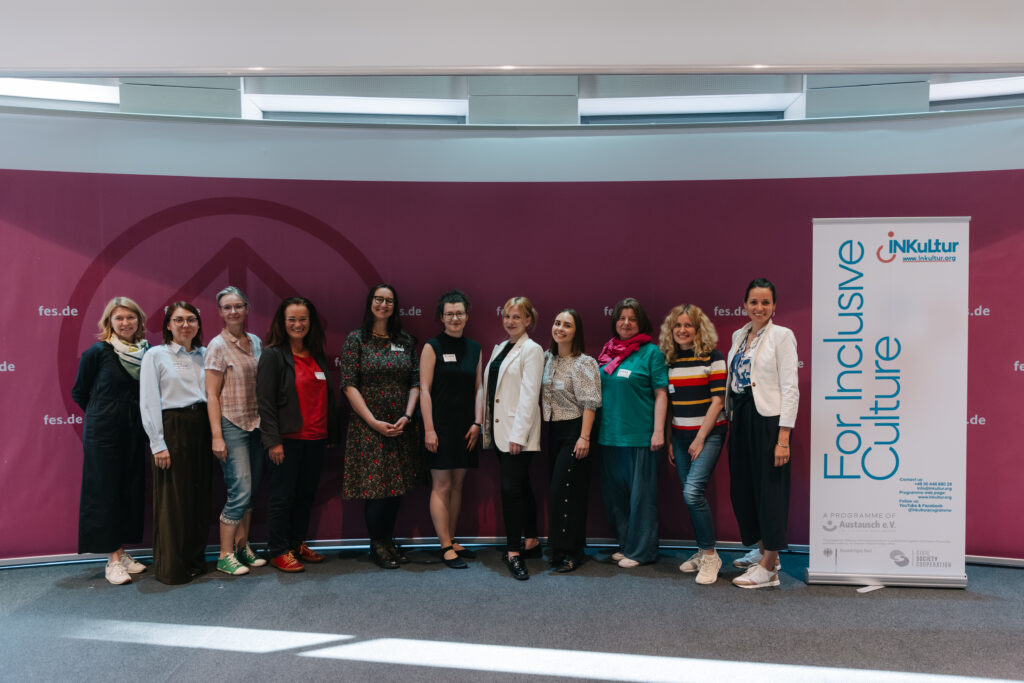

On 28 and 29 May, the INKuLtur team, together with the Friedrich Ebert Foundation (Warsaw), organized the two-day event “Displacement, Disability and Care: Needs, Challenges and Political Priorities for Germany and Poland” at the Friedrich Ebert Foundation in Berlin. The program combined a public panel discussion with an expert exchange involving stakeholders from Germany and Poland.
The event centered on the study “Invisible Care, Unmet Needs: The Situation of Ukrainian Caregivers of Persons with Disabilities in the EU”, published in March 2026 as part of the “It’s Ability” project (Link to Study). The study sheds light on a frequently overlooked group among Ukrainian refugees: persons with disabilities and their caregivers. It identifies critical policy gaps and documents the challenges these families face in their daily lives.
The findings reveal that forced displacement creates multiple barriers for persons with disabilities and their caregivers. Alongside mental health challenges, social isolation, and burdensome administrative procedures, respondents reported experiences of burnout, depression, and even suicide attempts. Many struggle with lengthy and complicated processes for the recognition of medical diagnoses, which are often necessary to access housing, social benefits, and support services. Limited availability of accessible language courses and flexible employment opportunities further restricts participation and integration.
The study also highlights a significant gender dimension: the overwhelming majority of caregivers are women whose unpaid care work remains largely invisible and insufficiently recognized by existing support systems.
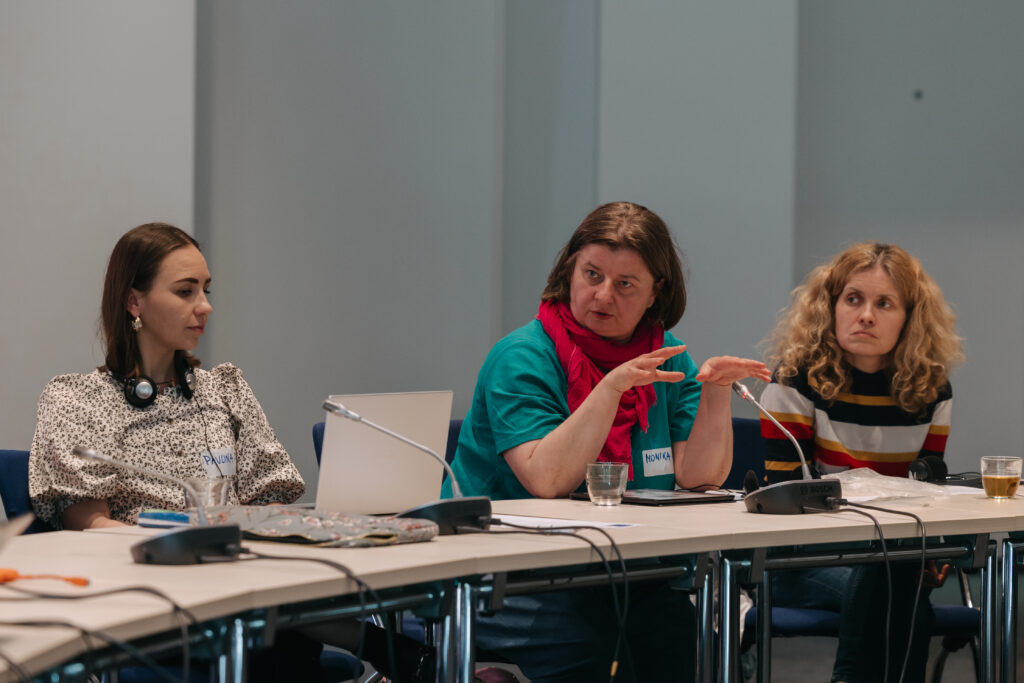
The panel discussion emphasized the importance of cross-border cooperation and coordinated governmental action in both Germany and Poland. Speakers included:
- Nataliia Zviagintseva, Project Manager of the “It’s Ability” project at Austausch e.V.
- Tetiana Goncharuk, social worker, human rights activist, and representative of the German research team
- Franziska Müller, representative of the Migration & Disability Unit at AWO Landesverband Berlin e.V.
- Dr. Anna Mogilatenko, Board Member of Sunflower Care e.V.
- Olena Chubar, a Ukrainian refugee living in Berlin since the beginning of Russia’s full-scale invasion of Ukraine, mother of two children including a child with autism, active member of a support group for Ukrainian parents of children with disabilities, and project assistant at the aid organization Opora
The Polish delegation included:
- Dr. Monika Nowicka, Assistant Professor and Deputy Head of the Sociology Division at Civitas University
- Paulina Sobolewska, Coordinator of the “It’s Ability” project in Poland
- Iryna Zozulya, a Ukrainian refugee living in Poland and mother of two children with disabilities
The event was moderated by Oleksandra Bienert, Director of the CineMova Ukrainian Empowerment Network e.V., historian, photographer, and human rights activist.
The second day brought together representatives of NGOs, municipalities, district authorities, and the Embassy of Ukraine in Berlin for an expert discussion focused on identifying practical solutions and strengthening cooperation. Participants formulated a set of policy recommendations aimed at protecting the rights of refugees with disabilities and their caregivers in line with the UN Convention on the Rights of Persons with Disabilities (UNCRPD).
Participants called for:
- the establishment of dedicated support centers and respite-care facilities for caregivers of persons with disabilities;
- faster recognition of Ukrainian professional qualifications, particularly in the mental health sector;
- the development of comprehensive integration policies and systemic solutions in Poland;
- guaranteed access to healthcare regardless of national disability recognition status.
Experts also stressed the importance of securing sustainable funding for community organizations and care networks, as well as strengthening collaboration among governmental and civil society actors.
In her closing remarks, moderator Oleksandra Bienert stated:
“It is important to see people as individuals and partners and to work with them as equals.”
This event was organized by Austausch e.V. as part of the INKuLtur program (Berlin), together with the Friedrich-Ebert-Stiftung, and the Polish Forum for People with Disabilities as part of the “It’s Ability!” project funded by the European Union, and the Foundation for German-Polish Cooperation.