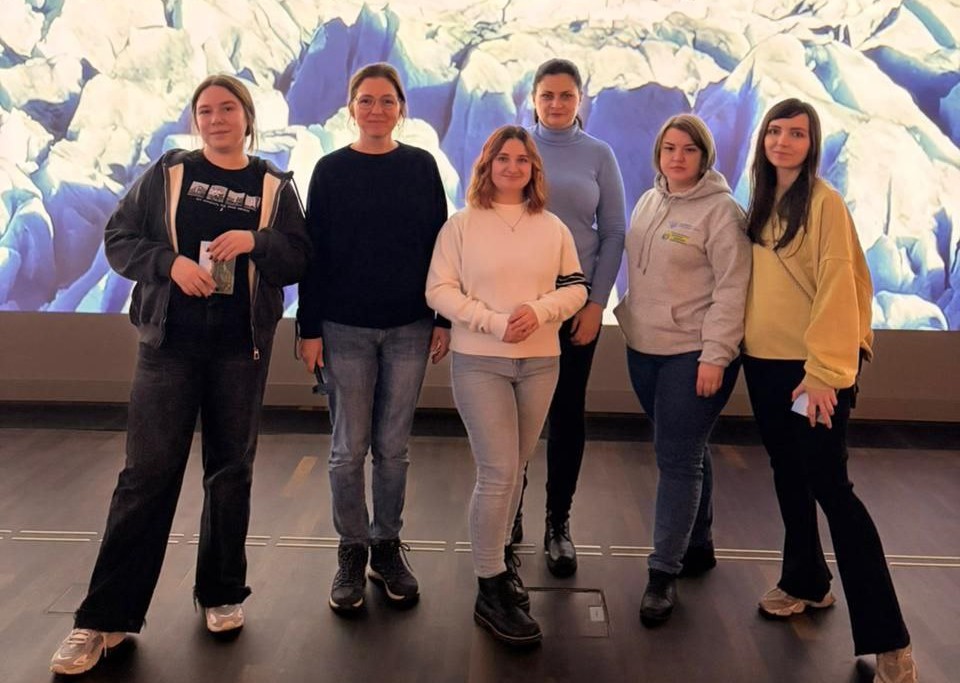




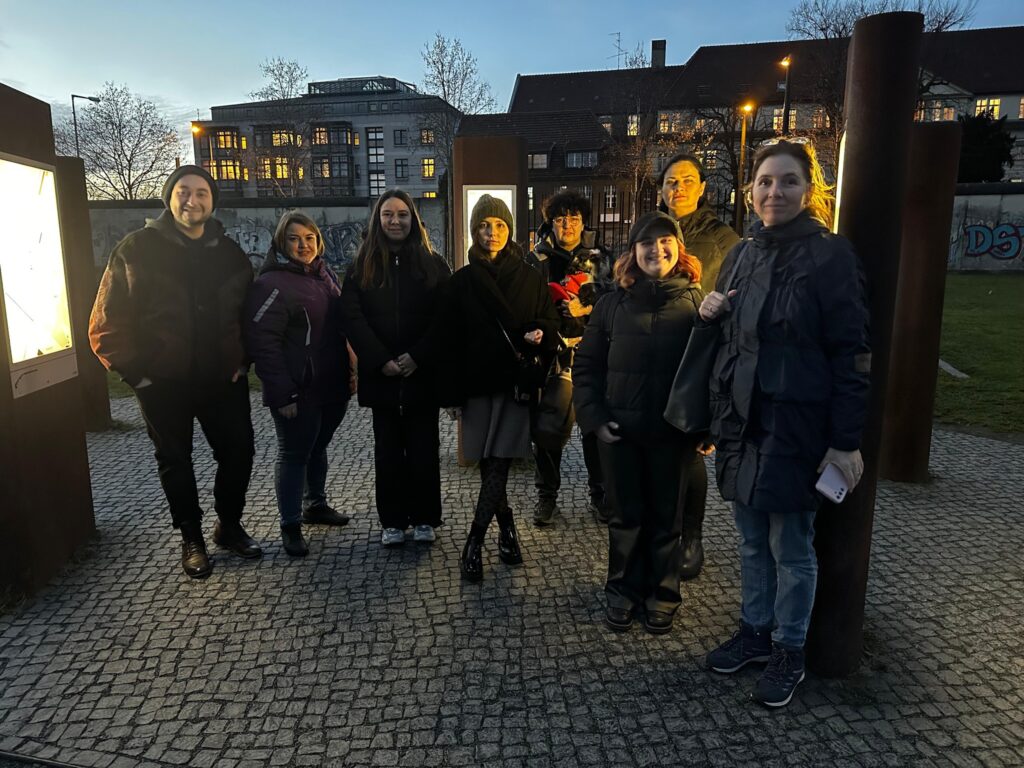

When environmental professionals and activists from Ukraine and Germany gathered for the international exchange “Environment, Recovery and Solidarity,” they brought more than expertise – they brought stories of resilience, destruction, and hope from communities facing unprecedented environmental challenges.
Organised by Austausch e.V., the exchange created a vital space for Ukrainian and German environmental initiatives to strengthen cooperation and reflect on pathways to recovery in the context of Russia’s full-scale war against Ukraine.
Voices from the Front Lines
For Halyna Zadorozhna, Head of the Scientific Department at the Dnipro-Orilskyi Nature Reserve, the opportunity to share Ukraine’s environmental story was paramount. Working at the only nature reserve in the large industrial Dnipropetrovsk region, she sees firsthand the unique riparian ecosystems of the Dnipro River that deserve protection. “It is important to convey to the international community how rich and valuable Ukraine is in terms of its natural resources,” she explains, noting that despite difficult conditions, Ukrainian scientists remain dedicated to preserving the country’s steppes, forests, rivers, and biodiversity.
The environmental toll of war extends far beyond Ukraine’s borders. Iryna Mastiuk from Smart Recycle, an underground recycling and sorting station in Dnipro, emphasizes this global dimension: “Ecocide caused by war has no borders. Pollution of rivers and soils affects not only Ukraine, but the entire world.” Her conversations during the exchange, particularly with representatives from the Ukraine Climate Office, helped her rediscover the importance of scaling up local environmental work.
From Sloviansk, a frontline city in Donetsk Region, Anna Baranova of the Siverskyi Donets Basin Water Resources Authority brings an urgent perspective. The war’s massive impact on forests, air quality, and especially water resources demands continuous attention. “These issues must be continuously raised,” she stresses, “and international support for cleaning and monitoring efforts needs to be strengthened.”
Building Bridges Through Knowledge Exchange
The programme brought together experts and activists to explore the multifaceted consequences of war: soil and water pollution, ecosystem destruction, damaged infrastructure, and the critical role of civil society in documenting damage and advocating at the international level.
Participants met with Yuliia Jesson, Head of the Ukraine Climate Office, to discuss Ukraine’s climate policy and how civil society keeps environmental issues in focus during wartime and reconstruction. Anna Ackermann shared insights on contemporary forms of environmental activism and civic engagement. The exchange also incorporated perspectives from beyond Europe: Jamal Alkirnawi, Founder and Executive Director of the NGO “A New Dawn”, shared his experience working with Bedouin and other war-affected communities in Israel, highlighting the importance of combining environmental work with trauma-sensitive approaches and social recovery.
“Such exchanges and study visits are critically important for both the Ukrainian and German environmental expert and civil society communities,” explains Anastasiia Bondarenko, Environmental Project Manager at Austausch e.V. She herself Kyiv-based, Anastasiia highlights that such gatherings give Ukrainian participants the opportunity to be heard directly abroad and convey first-hand information that often gets lost behind general news coverage. Meanwhile, international partners can engage directly with practitioners working on water resources, air quality, and environmental monitoring – “creating a space for the exchange of real knowledge, unconventional solutions, and innovations that are relevant not only for Ukraine but also for other countries.”
A Foundation for Solidarity and Recovery
Through expert discussions, participatory formats, and meetings with Berlin-based sustainable development initiatives, the exchange combined practical learning with strategic dialogue. In times of war, such initiatives play a vital role in strengthening civil society, fostering international cooperation, and building the foundation for sustainable recovery and European solidarity.
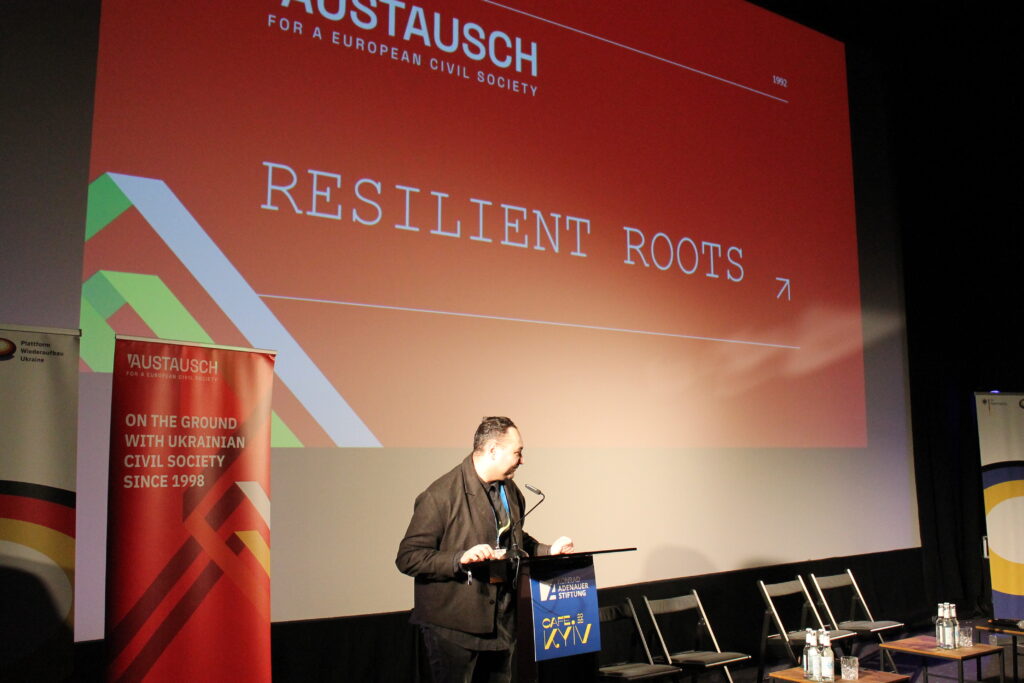
The exchange is part of the project “Resilient Roots – Strengthening Grassroots Environmental Leadership in War-Affected Ukraine,” implemented by Austausch e.V. and GreenRoots Hub with financial support from Brot für die Welt, and as a German-Ukrainian international encounter with support from the Kinder- und Jugendplan des Bundes (KJP) by the Federal Ministry of Family Affairs, Senior Citizens, Women and Youth.