




Four years into Russia’s full-scale invasion – and ten years since the war began in 2014 – migration dynamics in Europe are gradually shifting from emergency reception toward long-term integration, stabilization, and social resilience. Yet the largest displacement crisis continues not in Europe, but within Ukraine itself.
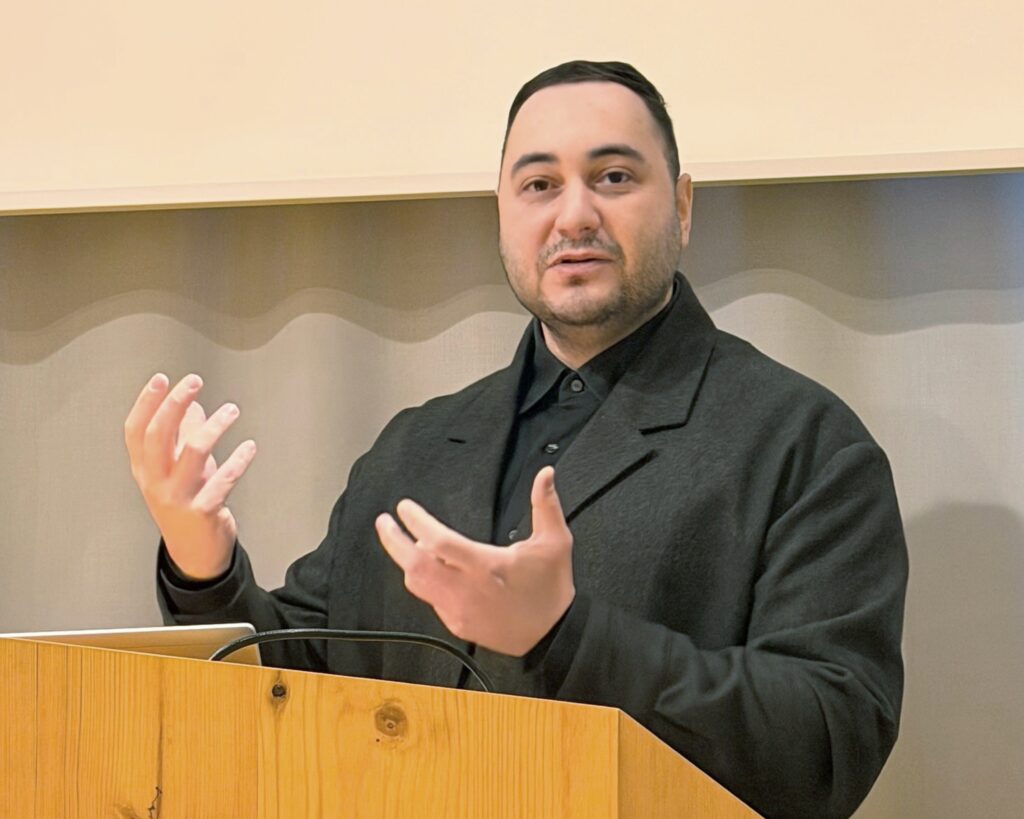
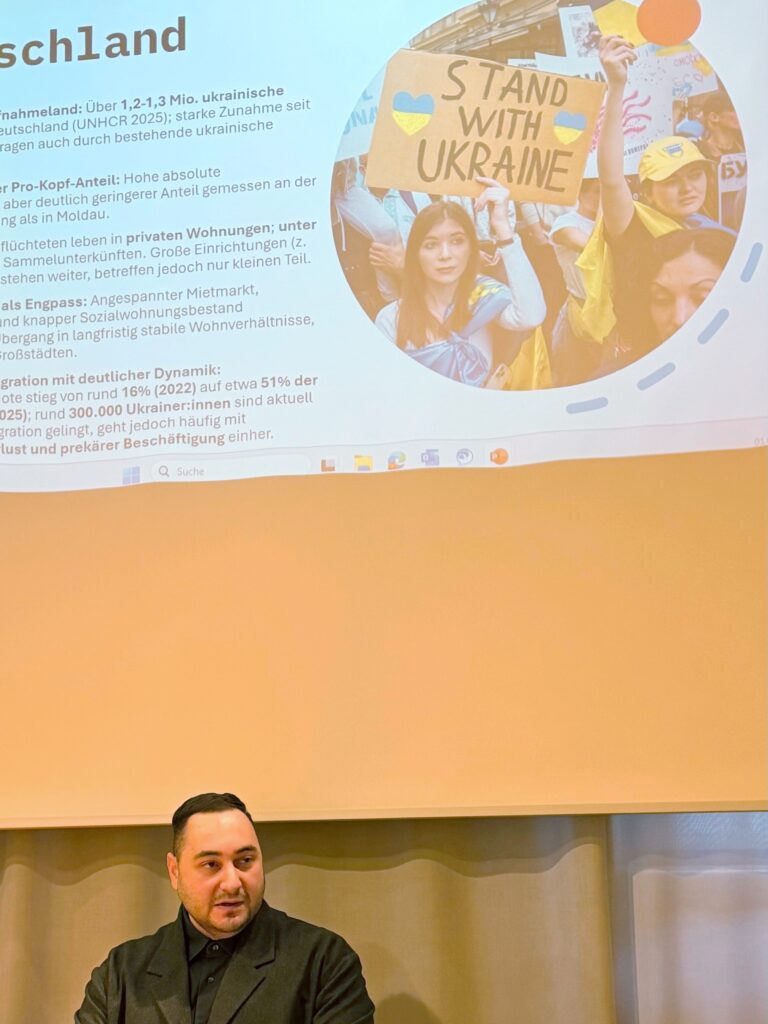
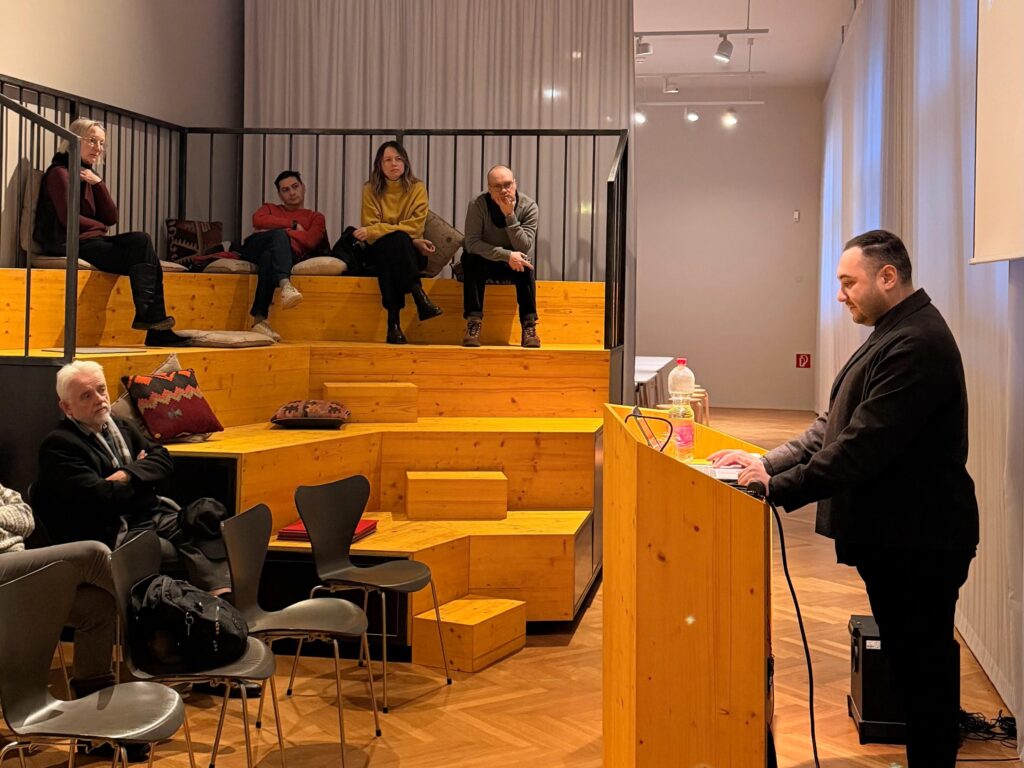
On 1 February 2026, Igor Mitchnik, Executive Director of Austausch e.V., explored these trends during a public lecture at the Museum Europäischer Kulturen in Berlin. The evening proved highly interactive, with active audience participation underscoring that Ukrainian migration remains not just a matter of solidarity, but a shared challenge shaping European societies.
Key trends and realities
Since February 2022, the war has triggered the largest forced displacement in Europe since the Second World War. Around 6 million Ukrainians currently live in European countries, with the highest numbers in Germany (1.2–1.3 million) and Poland (around 1 million).
But the largest displacement remains internal. As of early 2026, more than 3.7 million people are internally displaced within Ukraine. Many have been forced to flee multiple times due to shifting frontlines, widespread destruction, and relentless attacks on energy infrastructure.
A critical finding: despite massive strikes on Ukraine’s energy grid and an unbearably harsh winter, no new large-scale westward migration waves are occurring. However, according to UN projections, more than half a million people may still be newly displaced or evacuated inside Ukraine in 2026 alone.
From crisis response to long-term reality
In host countries like Germany and Poland, the focus has shifted from emergency aid to integration. Key challenges include access to affordable housing, labor market integration (often marked by qualification loss and precarious employment), social services, and psychosocial support. Meanwhile, a growing number of Ukrainians are planning to stay long-term, as return prospects depend directly on the war’s end and Ukraine’s economic recovery.
In the Republic of Moldova – Europe’s poorest country hosting the highest number of refugees per capita (around 4% of its population) – the situation remains particularly fragile. National systems are underfunded and overstretched, with around 60% of refugees still primarily dependent on humanitarian aid. International support remains essential, especially as many humanitarian organizations have withdrawn since 2025 and Russian pressure on Moldova continues.
Why support inside Ukraine matters for Europe
Summing up his presentation, Igor Mitchnik emphasized: “While millions of Ukrainians are living in EU countries, the largest humanitarian and social crisis remains inside Ukraine. Supporting people living through the war at home – energy supply, heating, basic services – isn’t aid at a distance. It’s part of a shared European reality. If we feel the cold in Berlin, people in Ukraine are living through a nightmare. And that reality isn’t separate from Europe. It’s part of it.”
Austausch e.V.’s engagement
Austausch e.V. has been directly engaged with Ukrainian migration and integration through its INKuLtur programme, implementing projects for several years that support Ukrainian refugees both in Ukraine and abroad. One such project is It’s Ability!, which focuses on caregivers of people with disabilities among Ukrainian refugees in Germany, Poland, and Lithuania. The project highlights their everyday challenges during forced displacement, access to social services and inclusive cultural spaces, and supports their integration by making these experiences more visible and promoting more inclusive approaches to migration.