




Final Event of “Lost in Transition?” and “Remembrance in Dialogue”
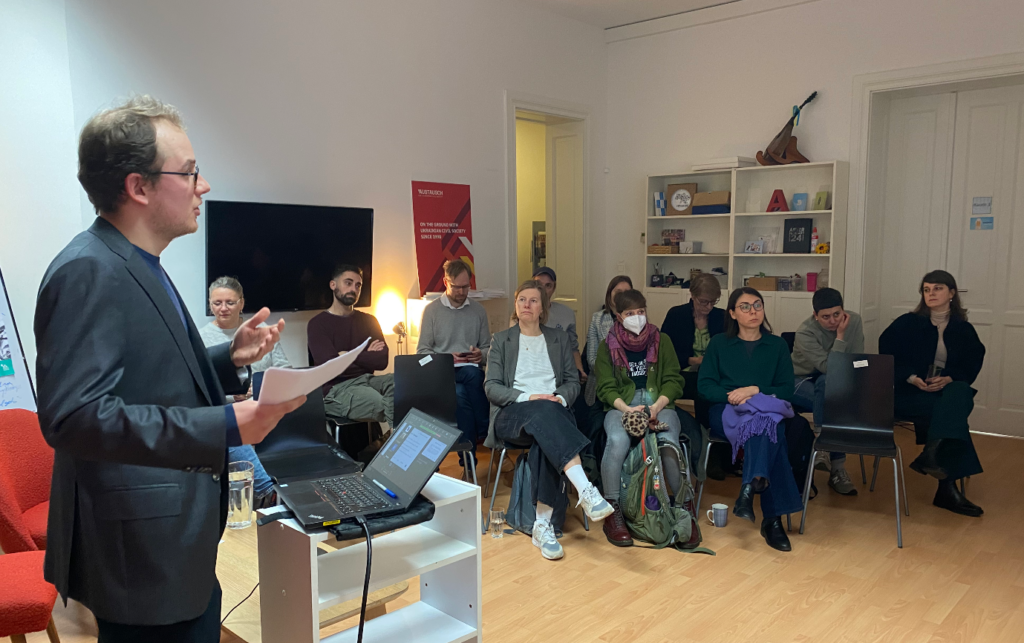
Austausch e.V. hosted a hybrid discussion in Berlin “Teaching History in Times of Change” bringing together educators, researchers, and civil society professionals from Armenia, Georgia, Ukraine, Germany, and Poland. The event marked the conclusion of two major international initiatives: “Lost in Transition?” and “Remembrance in Dialogue”. Both projects explore how history is taught when political landscapes shift, memories collide, and societies face new challenges of war, transformation, and identity.
Speakers shared their experiences from classrooms, memorial sites, and civil society organisations, reflecting on how to navigate contested narratives, censorship, trauma, and generational change.
The project Lost in Transition? examines marginalised experiences from the post-Soviet transition of the 1990s and offers a more nuanced view of a pivotal decade that continues to shape the region. A core achievement is a digital contemporary-witness database, containing interviews, contextual materials, and teaching modules for educators. These resources help teachers engage students with the complex legacies of transition and provide tools for working with contemporary witnesses in the classroom. The project was implemented together with partners from Ukraine, Georgia, Armenia, Poland, and Germany.
Diana Van Imschoot, Project Coordinator, “Lost in Transition?”
“The transition of the 1990s is often framed through simplified narratives – but the lived experiences are far more diverse and much more fragile. By documenting marginalised voices and creating accessible teaching materials, we hope to support educators in opening conversations about inequality, identity, and social change. The December event was a powerful reminder of how interconnected these histories still are.”
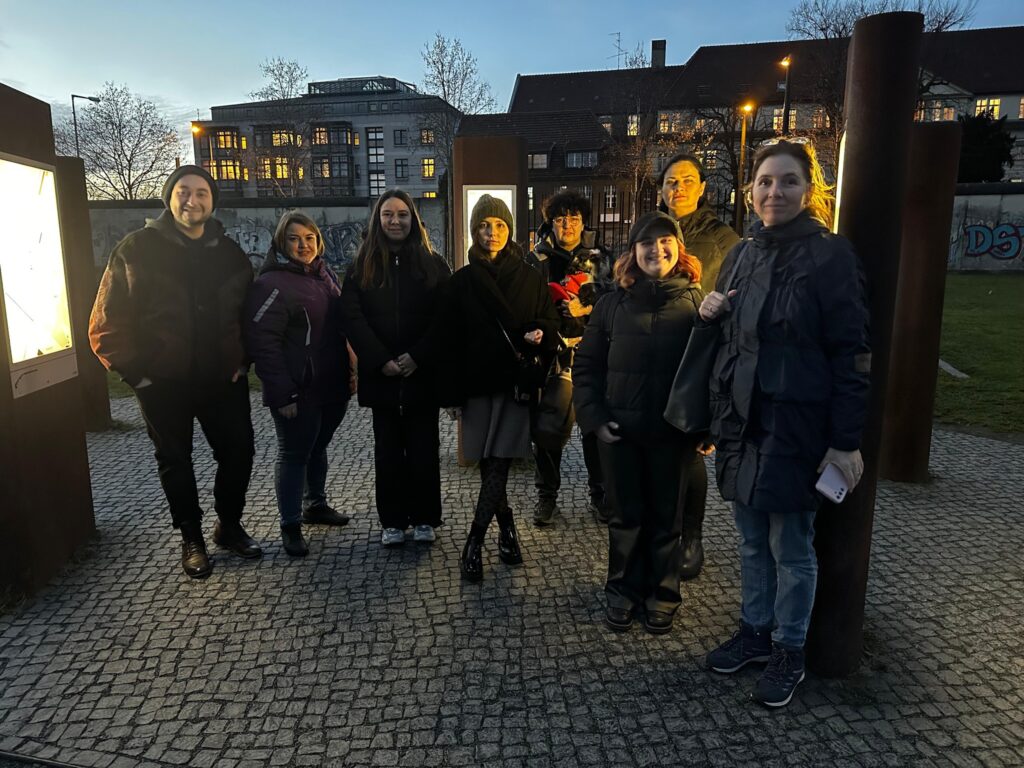
Conducted throughout 2025, the project “Remembrance in Dialogue” brought together educators from Germany, Poland, and Ukraine to explore how Russia’s full-scale war against Ukraine affects Holocaust remembrance and education about Nazi crimes. Through online trainings, a study trip to Ivano-Frankivsk, workshops, and collaborative writing, the group developed new methods for teaching history in times of conflict and uncertainty. The project supported participants in becoming multipliers, helping them strengthen remembrance work in their own schools, museums, and communities.
Paul Stricker, Project Manager, “Remembrance in Dialogue”:
“This project showed us how strongly the war in Ukraine reshapes historical remembrance across Europe. Teachers and museum educators are on the frontlines of defending facts, empathy, and democratic values. Bringing colleagues from three countries together allowed us to develop not just new methods, but a shared sense of responsibility for teaching history in a time of uncertainty.”
The final event demonstrated that historical education does not exist in isolation: it is shaped by present realities, political tensions, and the lived experiences of students and educators alike. By combining the results of both projects, the discussion highlighted the importance of transnational cooperation, digital tools, and inclusive teaching methods.
Austausch e.V. will continue supporting educators, civic actors, and cultural institutions committed to responsible and critical engagement with history.
The project Rememeberance in Dialogue is organised by Austausch e.V., Insha Osvita, Fundacja Zapomniane and Urban Memory Foundation and is funded by the EVZ Foundation and the Federal Foreign Office as part of the program YOUNG PEOPLE remember international. #JugendErinnert, #YoungPeopleRememberInternational, #EVZgefördert
Project Lost in Transition? is organised by Austausch e.V. with the support of the Federal Foreign Office of Germany and EVZ Foundation with cofinancing from the Federal Foundation for the Study of the Communist Dictatorship in Germany.